This Literacy Life: comprehension

Showing posts with label comprehension. Show all posts

Easy Ways to Teach Perspective with Mentor Texts

Mentor texts are great for helping our students better understand reading and writing. I use mentor texts quite a bit to teach my students new comprehension skills, and teaching perspective has several great texts to help children see how this important skill works in every day life. Virginia Readers' Choice picture book Alfie: (The Turtle That Disappeared) is the perfect book for helping students see that there are two sides to every story.
Different perspectives make stories more interesting and help readers see the entire story. Alfie: (The Turtle That Disappeared) is the perfect mentor text for seeing both sides of the story.

{Affiliate links are present in this post. This means when you click and purchase on a link, I make a small amount of money at no cost to you.}
0

A New Twist on Little Red Riding Hood

I love reading those classic fairy tales with my students and children. They have such great stories that teach our children some important lessons, but I am always amazed at home many children have not heard so many of these classic fairy tales. Today's Book Talk Thursday focuses on one of my favorites with a little bit of a twist.
Classic fairy tales are great way to help children understand various comprehension skills. Little Red is a new twist on the classic tale that will help children with so many comprehension skills.

Affiliate links are scattered throughout this post to fund future book purchases.

Little Red by Bethan Woollvin, a Virginia Readers' Choice selection, tells the story of Little Red Riding Hood in a new and updated way.

0

Exploring Theme with A Piece of Home

Have you ever had to move from a place you loved? Do you have students who have moved from another place and found it hard to fit in? Then today's Book Talk Thursday and Virginia Readers' Choice pick is for you!
Theme in fiction can be tricky because so many times more than one are present in a story. Using picture books to explore theme will help students with this tricky comprehension skill.

(Affiliate links are scattered throughout this post.) A Piece of Home by Jeri Watts will help students understand how they can make the best of a new situation.

0

Wonder: Finding Out What It's All About

Kindness is "in" now, but what do we really need to do to show it? Every day is a new day to show kindness in all we do!

We've all read it. We've seen the movie. We've laughed. We've cried. And then thought about what it all means. The message is clear. We all need to chose to be kind to those around us, but what does that mean? Here is what it is and what it isn't.

0

Believing in the Magic of Christmas

Using various comprehension skills can help students find theme in the books they read. Using read alouds helps them on their journey to better comprehension. Santa's Book of Names is perfect for that.

You may have thought that I missed a week of Book Talk Thursday, but I have been preparing this little unit to share with all of you. I have linked up with all of my friends at The Reading Crew for a Facebook Live hop. If you missed it, the video is below, highlighting my book choice. 
0

Teaching Problem Solving Skills with Goggles

Problem solving is an important life skill, and Goggles by Ezra Jack Keats is a wonderful book to help with it. Stop by for a freebie to go with the book!

It's everywhere. We all have them...problems! And we have to find a way to solve them, even if there is more than one way. I have joined in with my friends at The Reading Crew to bring you another fun mentor text blog series to get you ready for school! {Affiliate links are scattered throughout the post to fund future book purchases.}

3

5 Reasons Your Older Students Need Picture Books!

Using picture books with older students will help them as they work through various different literacy skills.

You wonder, you think ~ how can older students need picture books? We want them to be reading chapter books and really thinking about what is going on. Picture books are for the younger crowd. Bur really, are they? Research has shown that students, even in high school, can benefit from high quality picture books that teach lessons and help children learn. Here are five good reasons for using picture books in the upper grades.

Disclaimer about affiliate links:  I have used affiliate links throughout this post. That means when you click on the link and purchase from the website, I receive a small portion of your purchase. It adds nothing to your total, but it helps fund future book purchases for this blog.

0

Job Wanted for Book Talk Thursday

Facts and opinions can be tricky, but you can help your students gain a better understanding with this great mentor text.

Am I giving up Book Talk Thursday? Not yet! I hope to keep this going for a long time and love sharing my love of books with all of you. This week I am focusing on another Virginia Readers' Choice book, Job Wanted by Teresa Bateman. {Affiliate links provided to fund future book purchases.}

0

Making Main Idea Fun Again!

Working with main idea can get boring, but we can all make it fun for our students no matter what!

I have posted a lot about main idea over the course of this year, mainly because my 3rd and 5th grade groups have been working with this skill. A few weeks ago, we finished working with it, but I am just now getting around to posting about it. After some work with main idea, we spent one session having a little fun!

0

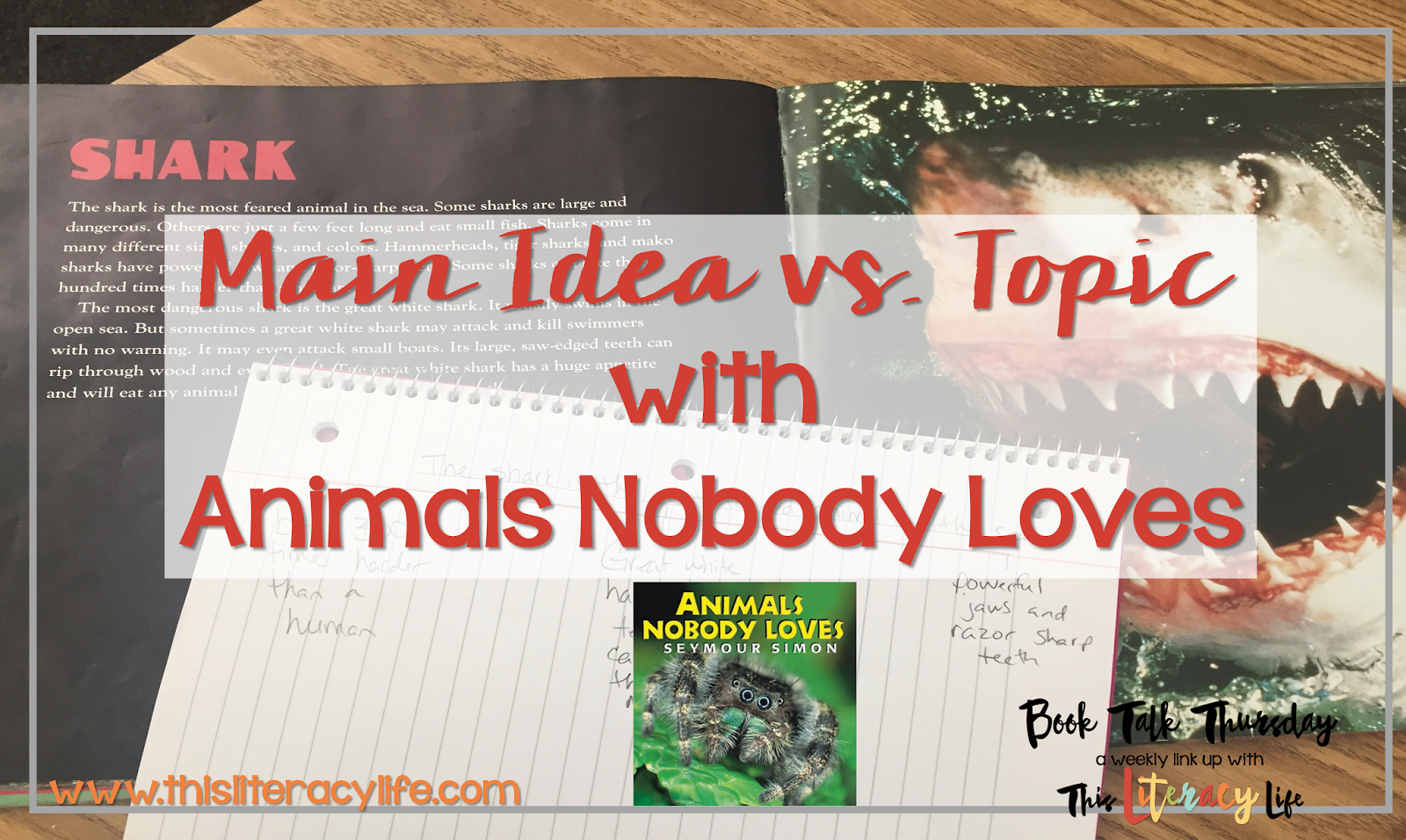
Animals Nobody Loves Invade Book Talk Thursday


Students think the topic is the main idea, but there is a difference! Get down to the main idea with Animals Nobody Loves!

What?! Animals that nobody loves?! Are you kidding? I found this book in a class I had to take and instantly fell in love with it. It has such great information about why people don't like the animals in the book and amazing pictures, but I knew it would also be perfect for teaching main idea with my fifth graders. I used Animals Nobody Loves by Seymour Simon to help them see the difference between topic and main idea. {Affiliate links inserted to help fund book purchases for this blog.}

0

Main Idea: It's All in the Details

Main idea and details can be tricky, but using and creating headings makes it more meaningful for our students.


I have found that our students can't grasp the concept of main idea, no matter what we do with them. We seem to beat it in their heads, but they just don't get it. This year, I am trying something a little different, and the third graders had a blast with it. Nothing fancy, nothing super fun, just mind blowing!

0

Too Many Pumpkins: A Mentor Text for Problem and Solution

Using mentor texts helps our students understand important literacy concepts. Too Many Pumpkins is a fun book to help students with problem and solution.

It's that time of year again: pumpkins, apples, and mentor texts! Yes, The Reading Crew is back at it again with their fall mentor text link up, and I am sharing one of my favorite fall books with a fun, free, and easy lesson to go with it! Find out how you can use Too Many Pumpkins with your students to help them have a better handle on problem and solution. {Affiliate links provided to help fund book purchases.)

5

We're in the Wrong Book! A Book Talk Thursday Genre Sort

Book genres can be tricky for many students, but this simple and fun way to sort will have kid begging for more books!

What happens if you go to the wrong place? You feel silly and try to find your way to the right place. Bella and Ben are back again after Bella's dog was eaten by the book. You can find that review {here}. So, what happens when Bella and Ben find themselves in the "wrong book"?

0

Enhance Comprehension with Directed Listening Thinking Activity

Using Directed Listening Thinking Activity helps students with comprehension skills and strategies. These simple steps can be used with almost any book!

How do you get students involved in your read-alouds? A simple solution comes out in the DLTA (Directed Listening and Thinking Activity). Students remain involved as you read aloud and gain important comprehension strategies all at the same time! As I begin the school year, I spend much of my time working with all student groups on various comprehension skills and strategies.
0

The Magic of Fairy Tales Part 2

Last week, I wrote about the lessons our students can learn from fairy tales. You can check that out in this blog post ~ The Magic of Fairy Tales.  This week I am focusing on how we can use them for instruction in our classrooms.
Fairy tales are great for helping with various comprehension strategies. The simplicity of them helps readers understand some tricky skills.

When teaching a new comprehension skill, many times I use fairy tales since they are a familiar story to many children. We don't have to take the time to think about the plot of the story and can focus on that skill.

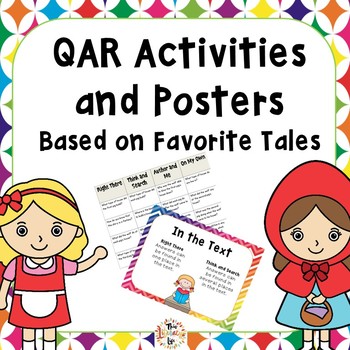
For example, The Three Little Pigs is a familiar story to many students. I use this one a lot to help older students simply understand something like cause and effect or theme. I really like using it to help introduce QAR (Question-Answer Relationship) to students. I created a QAR sort using this story to help students with this skill. Click below to head to my TPT store to purchase it. I hope to add some more fairy tales to this over the summer, if time will allow me.
QAR Sort Based on The Three Little Pigs

I love that fairy tales are such simple stories. They are perfect for teaching plot structure, even to older students. Since the stories are familiar (sometimes), they can really hone in on those parts of the plot. Here is an example of how a group of 6th graders used Little Red Riding Hood to show plot structure.
Fairy tales are great for helping with various comprehension strategies. The simplicity of them helps readers understand some tricky skills.

The rich vocabulary in the tales also allows for great context clues and vocabulary instruction. Kids can get so much out of those tales.  Reading this excerpt alone from Rapunzel, you can see all of the great vocabulary students can learn.
Fairy tales are great for helping with various comprehension strategies. The simplicity of them helps readers understand some tricky skills.

And let's not forget comparing and contrasting. Not only can students compare and contrast characters within the fairy tales, but they can compare characters between tales or even types of tales. I spent that summer in graduate school looking at some different versions of Cinderella, and now there are so many others for different tales. I love seeing how different cultures change the tales up a little to meet their needs. Recently, I purchased Petite Rouge by Mike Artell, which is a Cajun version of Little Red Riding Hood. I love reading those with students and then comparing and contrasting the two books ~ characters and all!

A few years ago, I worked with my students to see the differences between Goldilocks and the Three Bears and  The Three Snow Bears by Jan Brett. Here is what we did to see the differences.
Fairy tales are great for helping with various comprehension strategies. The simplicity of them helps readers understand some tricky skills.
Click {here} to see that blog post!

So, use those fairy tales in every grade level! Our students can learn so much from them!

Share it with the world and pin for later!
Fairy tales are great for helping with various comprehension strategies. The simplicity of them helps readers understand some tricky skills.

0

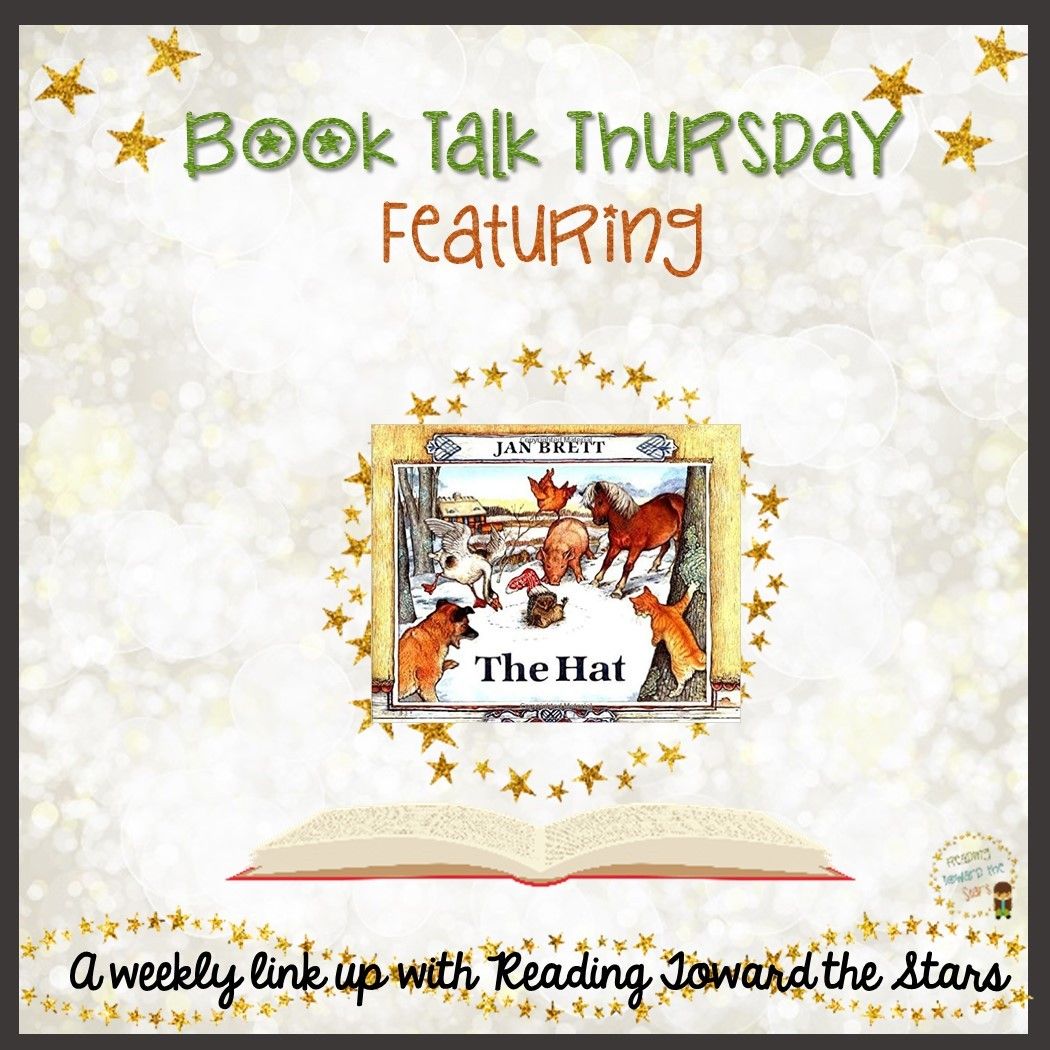
Book Talk Thursday ~ The Hat

I love using picture books to help my students with comprehension skills.  Today's Book Talk Thursday does just that!

I love using Jan Brett books to help my students with predictions.  Sometimes they just can't see the big picture.  Yesterday I was working with a student who had to write the next chapter in the book.  There was no next chapter, but he had to write a prediction.  He could not wrap his head around it and wanted to read the next chapter, so he knew what to write.  It took a lot of work, but we finally got there, and he was able to write the "next chapter".

The book The Hat is perfect for helping students make predictions.
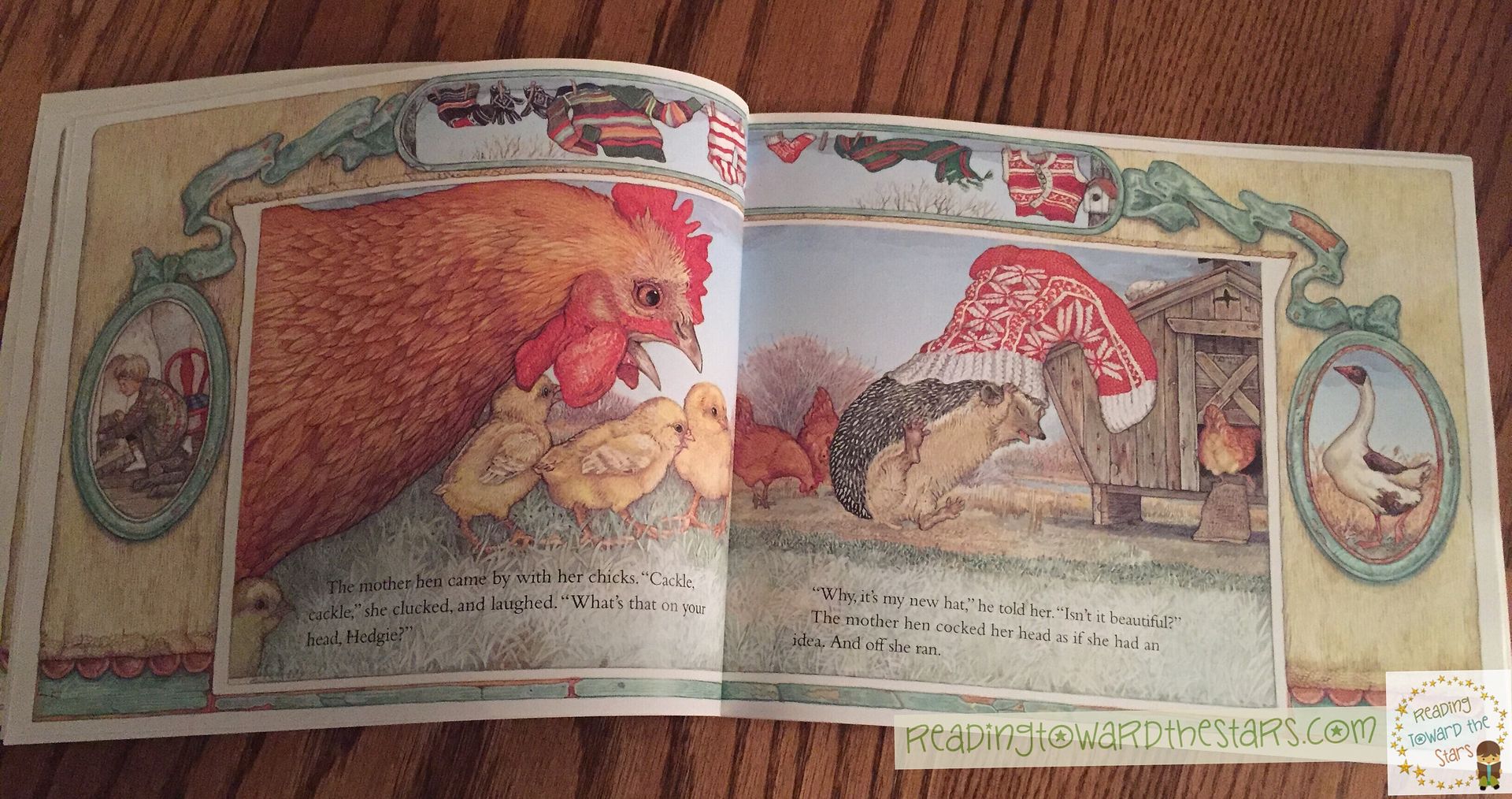
In the book, Lisa has put her winter wear on the clothesline to get some fresh air.  Her sock flies off in the wind, and a hedgehog gets it stuck on his head. As he goes around, the other animals see it and want a hat too. Kids always laugh as they see the animals in their funny hats.

Even better is the way kids can predict by using the pictures on the pages. If you look on the side of each page, you can see the next animal who will get the next "hat". Students can think about what item the animal will get and how they will act with it.

Making predictions can be tricky, but this predictions chart is perfect for helping students think about those predictions before, during, and after reading  a book.  You can grab it by clicking below.

It is also in my Predictions Task Cards set, which you can purchase by the link below.


But, if you love task cards, you can also purchase a bundle of all of my task cards from Educents through February 15 for half off the regular price. That is $6 for all of my task card sets worth $12!  Click {here} or on the link below to purchase it.


If you haven't been to Classroom Tested Resources yet to see what literacy skills picture books can help with teaching your students, you need stop by.

And don't forget to link up again this week!  Here's the button you can include in your post!


    An InLinkz Link-up

**Affiliate links are supplied in this post to help fund this blog.**
   
1

4 Reasons We Should Model, Model, Model

When you think of modeling, do you think of this?

I hope not! As a teacher, I model so much every day, and since I work with struggling readers, it is super important. Find out the four reasons modeling is so important for our students!

2

Book Talk Thursday ~ The Mitten Tree


Winter is finally here in Virginia!  After a record-breaking warm Christmas of almost 80 degrees, the cold weather is here.  Now bring on the snow!

But before we have snow, let's make sure everyone has mittens!

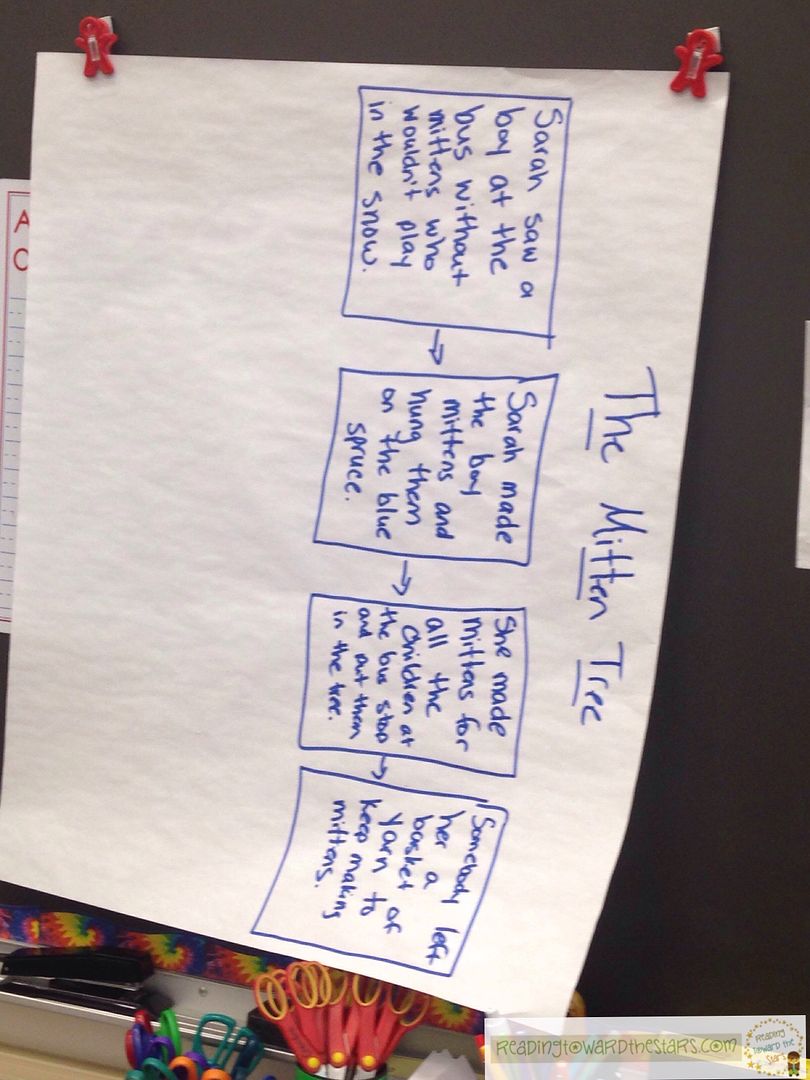
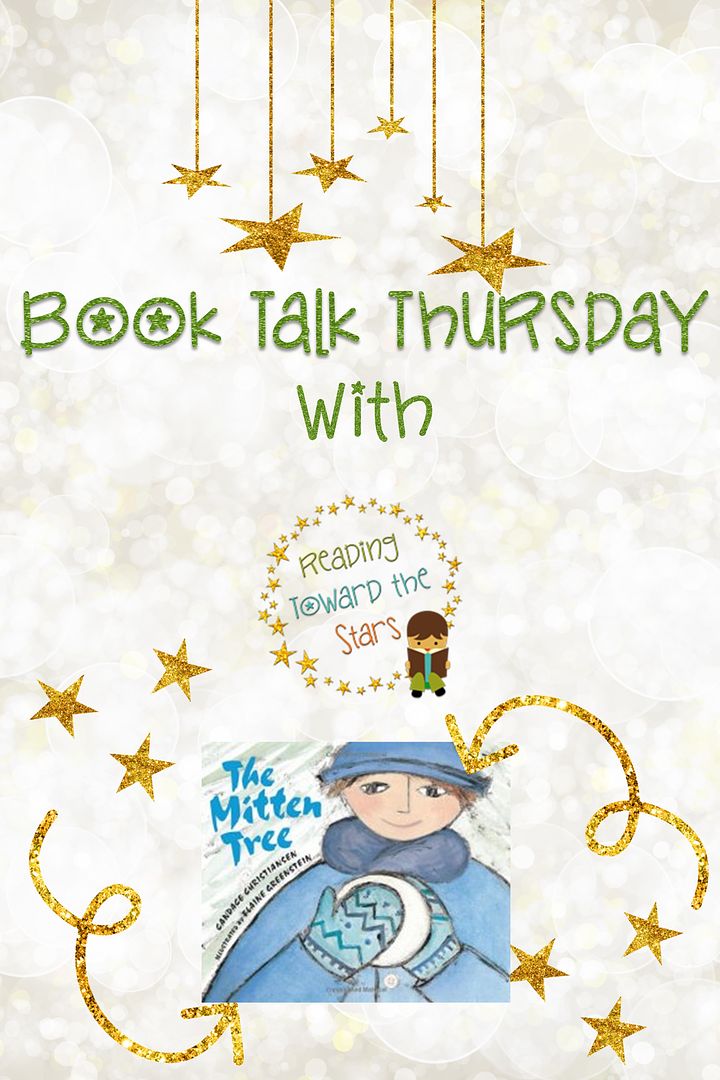
This week with my second graders, we worked on sequencing the MAIN events of the story, not the entire story.  I used the book The Mitten Tree by Candace Christiansen to help students with the concept.  It was suggested by one of my go to comprehension lesson sites ReadWorks.

In the book, Sarah, an older woman, watches the children each morning at the bus stop.  One morning, she notices a young boy who is not playing in the snow like the other children.  She stays up late to knit him some mittens and hangs them on the blue spruce tree for him.  Each day she notices that other children don't have matching mittens or any mittens at all.  She continues to make mittens each night and put them on the tree.  It becomes a game for the children.  Eventually, she runs out of yarn, but someone brings her a basket of yarn to continue making mittens.

I loved reading this book with my second graders!  It was perfect for helping them do more than sequence events.  At one point, we were trying to figure out why one kid wasn't playing in the snow.  When I read the words, "His hands were deep in his pockets," one of my students said ~

"He doesn't have mittens!"

I wasn't even planning a lesson on inferences.

Here is the flow map we made together.

Then I turned it sideways to show them that you can look at it a different way too!  

It was a great way for children to see the way we could tell the story in only 4 events.

Don't forget to link up again this week for Book Talk Thursday!  I enjoy the winter books I learn about through your link ups!  Use the button below to link up and link back to my blog.


    An InLinkz Link-up


Pin for later:

0

Book Talk Thursday ~ Word Callers


For Book Talk Thursday, I am sending you over to Adventures in Literacy Land to check out our book study for the book Word Callers by Kelly B. Cartwright.

This book has been a complete eye opener for me as I work with students who read really well but don't comprehend any of it.

Click on any of the pictures below to take you to the posts for each section.  The final post will be tomorrow, so stop by as we finish up the book!


And don't forget to link up again this week!


    An InLinkz Link-up
   
0